
A solo founder is the only founder of a company: one person who incorporated it, owns the founding equity, and carries the final say on product, hiring, and fundraising. Solo founding is common and getting more so. In Carta's Solo Founders Report 2025, the share of new startups with a single founder rose from 23.7% in 2019 to 36.3% in the first half of 2025.
That doesn't mean it's easy. Solo founders raise less venture money, work with less margin for error, and have nobody at the table who is equally invested. This guide covers how investors see solo founders, what the real costs are, how to cover them, and when to look for a co-founder anyway.
Key takeaways
- More than a third of new startups on Carta now have a single founder.
- Solo founders raise a smaller share of venture dollars, so expect questions about coverage and risk.
- Advisors, early hires with equity and a peer group cover most of what a co-founder would.
- Look for a co-founder when one specific gap blocks progress and no hire fills it.
What is a solo founder?
A solo founder starts and runs a company without a co-founder. You may have employees, advisors, contractors, and investors, but you are the only person with founder-level equity and responsibility from day one. Every decision about product, hiring and money ends with you, and so does the risk if the company fails.
The line is about who shares the original risk. Your first engineer with a 2% option grant is an early employee, not a co-founder. Someone who joins in month eight and negotiates 15% equity and a C-level title is a different case, and many teams call that person a co-founder even though they weren't there at incorporation. For the difference between founder titles, see our post on founder vs. cofounder.
How common is it to be a solo founder?
More common than most people assume. Carta's Founder Ownership Report 2026 found about 36% of startups founded on its platform in 2025 had a solo founder, up from 31% in 2024. One likely reason is that software, AI tools, and contractors have lowered the cost of getting a first product to market.
Solo at the start doesn't mean solo for long.
Solo founder vs. co-founder: which is better?
Neither is better in general. A co-founder gives you a second brain, a split workload, and someone to share the bad weeks with. A solo path gives you speed on decisions, no equity split, and no risk of a founder breakup, which can sink an early company.
Co-founder conflict is real, though it's manageable. Eric Berry, who co-founded TripleLift, said on our podcast that he and his two co-founders found their swim lanes and kept each person on the work they were exceptional at. When they disagreed on strategy, they hired outside strategy consultants to help evaluate the options, which kept disagreements from turning into shouting matches.
The honest tradeoff is this. A good co-founder is worth a large slice of equity. A bad one is worse than none. If you haven't found someone you'd trust with a fifty-fifty split, running alone is a sound choice, not a failure. Our post on whether you need a co-founder walks through how to decide.
Can a solo founder raise venture capital?
Yes, but the numbers show the gap. In the same Carta Solo Founders Report 2025, solo-led companies were 30% of startups founded in 2024 but received only 14.7% of the cash raised in priced equity rounds that year. Investors are not refusing solo founders outright. The slice they fund is smaller than the slice that exists.
What investors worry about
Prepare an answer to each of these before a first meeting:
- Bus factor. If you get sick or burn out, the company stops.
- Breadth. One person rarely covers product, sales, and engineering at investor-grade depth.
- Resilience. Startups are long and lonely. Investors want proof you'll still be here in year five.
- Hiring ability. Can you attract strong people without a founding partner to vouch for the project?
How to answer them
Don't argue the point in the abstract. Show evidence. Name the senior people already in your corner, whether advisors, a first hire with real equity, or a fractional executive covering your weak side. Show traction that came from your own execution, and show that you made decisions fast and changed course when the data said to.
Say plainly what you've done about the gaps. "I'm a product person, and my CTO-level advisor reviews every architecture decision" is a stronger answer than "I can do it all." If you want the broader mechanics of a raise, start with our startup fundraising guide. Plenty of solo founders also choose the slower, profitable route on purpose and never raise.
What are the real costs of being a solo founder?
Three costs come with the work.
Isolation. Nobody else feels the stakes the way you do. Good news and bad news both land on one person, and there's no one to debrief with at night who actually knows the business.
Guy Yalif, who co-founded Intellimize and later became Webflow's chief evangelist, described the problem on our podcast: "I'm sitting here thinking through these super hard problems and I really can't talk to anybody about them because they're so sensitive." His two co-founders meant he skipped that. "I had the privilege of skipping that because I got to talk to these two ... about literally everything and that for me was a superpower." If you're solo, you have to build that outlet on purpose.
Decision load. Every call is yours. That is fast, and it's also tiring. Without a partner to push back, a bad idea can run for months before anyone tells you it's bad.
Bus factor. Everything lives in your head and your accounts. If you disappear for two weeks, so does the company. It's also the one you can reduce the fastest with documentation and a deputy.
How do you cover the gaps without a co-founder?
You can't clone a co-founder, but you can rebuild most of what one provides.
- Advisors. Pick people who have done the specific thing you're weak at, and give them a defined role. Equity for advisors is usually small and vests over time. See typical advisor equity ranges and how advisors differ from mentors and investors.
- Peer groups. A standing group of other founders gives you the sounding board a co-founder would. This is the most direct fix for isolation and decision load.
- Early hires with meaningful equity. A strong first engineer or operator with a real stake behaves much like a co-founder without the title. Give them scope, not only tasks, and hire them to scale what you already know works. Wade Foster, who co-founded Zapier, said on our podcast that many founders get this order backwards: "I'm going to bring in people to build the business. And I'm like, well, you build the business. You bring in people to scale what you know about the business."
- Fractional executives. A part-time CFO, CTO, or head of sales covers a function at a fraction of the cost of a full-time hire, which suits the stage before you can afford one.
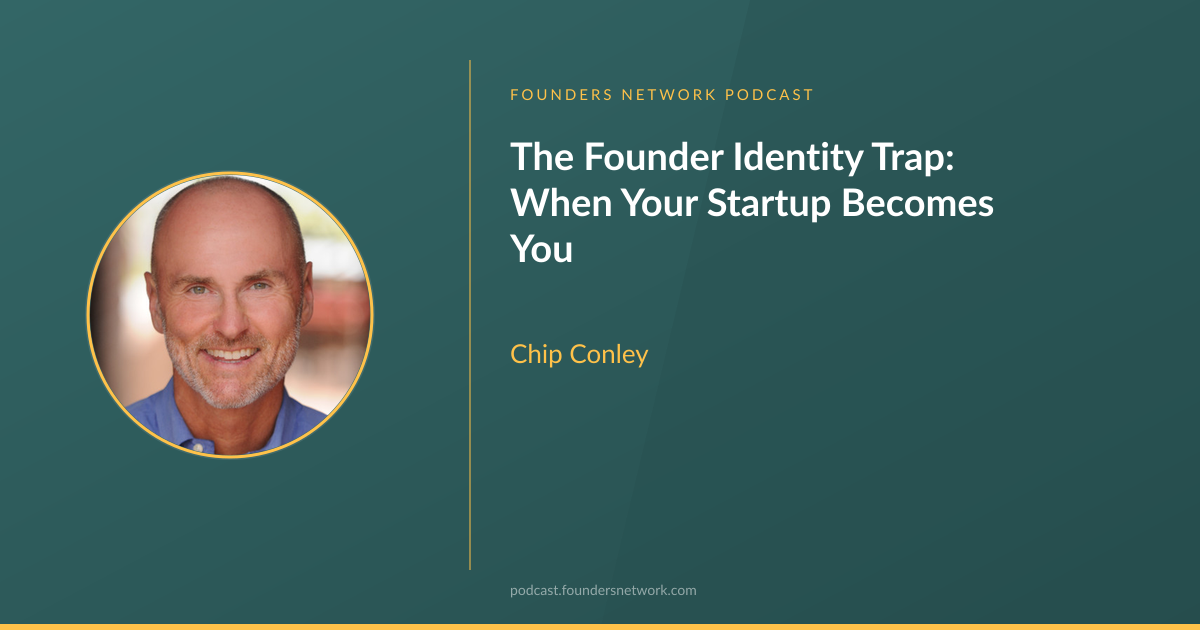
Chip Conley, the hospitality entrepreneur and author, made the same point about breadth on our podcast: you need experts in the areas you don't cover, whether they're co-founders or senior leaders. The test is that their skills complement yours instead of repeating them.
How do solo founders avoid burning out?
Build rhythm in early. Block a weekly review where you look at the numbers and decide what to stop doing. Keep a short written log of decisions and why you made them. Schedule recurring time with people who will tell you when you're wrong.
Founders who run alone and last tend to have somewhere to take the hard conversations. That might be a mentor, a coach, or a group of peers. Our post on why founders should find peer mentors explains why that kind of group works better than going it alone.
When should a solo founder look for a co-founder anyway?
Look for one when a specific gap is blocking progress and no hire or advisor fills it. The common cases are a non-technical founder who can't ship a product, a technical founder who can't sell, or a business that needs two full-time owners to move at the speed the market demands.
Also look if you notice that the isolation is hurting your judgment. If that's you, work with a candidate on a real project before you offer equity. Y Combinator runs a free co-founder matching service, and Paul Graham listed a single founder first in his essay on the biggest mistakes that kill startups.
Where can solo founders find peer support?
Founders Network is a selective peer mentorship community for tech startup founders, with city chapters, small peer groups, mentoring sessions, and introductions to other founders and investors.
If you're building alone and want a group of founders to work through it with, you can request an invitation to Founders Network.
Frequently asked questions
Is a solo founder the same as a sole proprietor?
No. Sole proprietor is a legal structure for an unincorporated business. A solo founder can run any structure, and venture-backed solo founders usually run a Delaware C corporation.
Do investors fund solo founders?
Yes. Solo-led companies do raise priced rounds, but Carta's Solo Founders Report 2025 found they received 14.7% of the cash raised in priced rounds in 2024 despite being 30% of startups founded that year. Expect questions about bus factor and breadth, and answer them with named advisors and early hires.
Is it better to have a co-founder or go solo?
It depends on the person and the business. A strong co-founder shares the workload and the risk. A weak match is worse than none. Run alone if you haven't found someone you'd trust with half the company. Co-founders also give you someone to talk through the hard problems that are too sensitive to share widely.
How do you succeed as a solo founder?
Cover your weak side with advisors, fractional executives, and early hires with equity. Join a peer group so you have a sounding board, document how the business runs, and raise only if the business needs outside capital.
How common are solo founders?
Carta's Solo Founders Report 2025 found that 36.3% of new startups in the first half of 2025 had a solo founder, up from 23.7% in 2019.