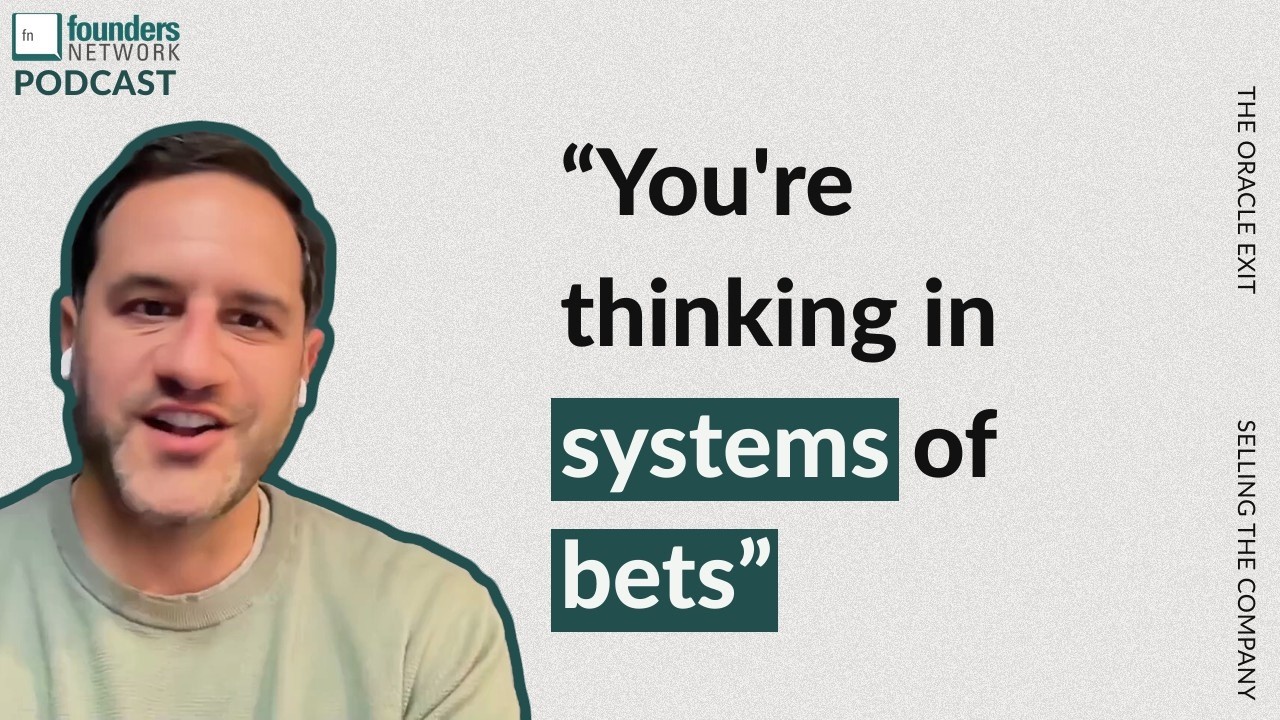
Hooman Radfar runs his company as a system of bets. He assumes some hires, plans and products will fail, decides in advance which failures are acceptable, and plans backwards from the one big bet the next round depends on. Radfar co-founded AddThis, which Oracle acquired, was a founding partner at Expa, and is now co-founder and CEO of Collective, an online financial back office for businesses of one.
Host Kevin Holmes, CEO of Founders Network, introduced Radfar on the episode as someone who has supported founders from both sides of the table, as an investor, a venture partner and a founder. They covered how much to tell your team, how to pick investors, whether this is the last tech cycle, and why culture outlasts the founder.
Key takeaways
- Radfar says a CEO has to design for systematic failure, the way an investor builds a portfolio.
- Telling your team only good news leaves them unable to read a shock when one comes.
- Define the big bet in numbers, then plan quarter by quarter back from it.
- When you take an investment, you get a partner first and a firm second.
- Focus on the customer's problem, not on predicting what the AI labs will do next.
What Does It Mean to Run a Company as a System of Bets?
Radfar learned the idea from investing. A good portfolio has a few winners that carry it, a fat middle, and some zeros you try to keep to a minimum. When he started investing, it felt like constant failure, because you only see the winners winning.
He argues CEOs should think the same way about their own companies. If you hire a number of people, some will not work out. You will have churn. As you scale, you will have HR problems.
The useful question is which failures are acceptable and how to make them part of learning instead of something catastrophic. He says the shift helped both his management and his own well-being, because he stopped treating every miss as a personal failure.
How Much Should Founders Tell Their Team?
Radfar recommends what he calls constructive optimism: an honest account of what is happening, framed around what you know, what you don't know and what you will do about it.
He learned it the hard way. When the 2008 downturn hit, an employee came to him shocked that the business was not doing as well as he thought. Radfar had shown the team only what was going right. When a systemic shock arrived, they had no way to calibrate how serious it was, and he had treated good people as if they couldn't handle the truth. If people don't understand what is happening when a shock hits, he says, they may leave or stop trusting you.
His summary of the founder's role:
"Your job is alignment. That's it is your only job, honest to God. I mean if you don't align people, what good are you?"
Founders have to align investors to capitalize the company, employees to build it, and customers to buy it. Kevin noted that sharing the problem alongside the plan tends to build more trust, and that founders don't have to have every answer.
How Do You Plan Backwards From the Big Bet?
For a seed-stage company, Radfar says the big bet is usually product-market fit at enough scale to raise a Series A. The work is defining what that means in numbers for your business. For a subscription business, that might be a revenue run rate plus a retention rate.
From there, plan quarter by quarter. If you need retention data before you raise, you have to launch early enough to collect it. Younger founders push back that they don't know enough to plan. Radfar's answer is that the plan isn't sacred; it gives you checkpoints so you can correct the plan or the destination. Without a North Star and a path, he says, you are thrashing.
Collective's own bet is on margin. Radfar has prioritized software-level margins over faster growth, and he admits the market may not reward that today. His view is that investors will eventually value AI businesses for the same properties they valued in software: high margins and predictable revenue.
How Should Founders Choose Investors?
Radfar has usually been able to pick his investors when it counted. His main lesson is that you are not getting a firm, you are getting a partner, and you need to vet both. Partners leave. Two of his major investors' partners left within a few weeks of each other, and he had to fall back on the firms.
He suggests matching the partner and firm to your current stage rather than hoping for one investor who fits every period, since firms change as they grow. A big-name firm in your first round is great if you are up and to the right, he says, and less certain if you are not. For more on the relationship after the check clears, see building investor-founder relationships.
He also cautions against treating investors as the enemy. Most are ordinary people who want the company to do well, and nobody wants to be on the call about a recap or layoffs. Starting from the assumption that the other side is trying to do their best, he says, gets more out of the relationship.
Is This the Last Tech Cycle?
More of the people Radfar knows believe this is the last cycle than he has ever seen before. He is not one of them. He expects a pullback, with inference becoming a commodity as open-source models spread and cost per token falls.
His advice is to check what the loudest voices said in earlier cycles, and to remember that firms paid on assets under management do well either way. In a period of change, he spends his time on the customer: businesses of one that will never hire a finance department. AI changes how fast Collective can serve them, not whether they need help.
Why Is Culture the Operating System?
Asked whether founders have to be ruthless to win, Radfar says no. You can run a high-performance team with a clear bar and still treat people with dignity. He thinks founders who copy a famous CEO's reputation are reasoning lazily, because they don't know what that person did every day.
"The culture is the OS."
A company built around one person's genius has nothing left when that person goes. He points to Apple after Steve Jobs as evidence that more was built than the myth suggests. Kevin connected this to humility, the value he opens every FN meeting with. For more on building culture on purpose, see building an intentional company culture.
Frequently asked questions
Who is Hooman Radfar?
Hooman Radfar is the co-founder and CEO of Collective, an online financial back office for solo businesses. He previously co-founded AddThis, which Oracle acquired, and was a founding partner at Expa, where he backed and co-built startups.
What is a system of bets?
It is Radfar's way of running a company like a portfolio. You expect some bets to fail, decide in advance which failures are acceptable, and set checkpoints so you can adjust the plan or the goal.
What is constructive optimism?
It is how Radfar communicates with investors, employees and customers. He shares what went wrong along with what he knows, what he doesn't know and what he will do next, so people can calibrate when the business hits a shock.
How should founders evaluate an investor?
Radfar says to vet the partner and the firm separately, because partners leave. Match both to your current stage and expect the relationship to change.
What does Collective do?
Collective provides bookkeeping, tax and accounting services for self-employed business owners, delivered through software and a team of accountants.
You can hear the full conversation with Hooman Radfar on the podcast.
Founders Network is a peer mentorship community for tech startup founders, and membership is by application. If you'd like to work through these questions with other founders, request an invitation.