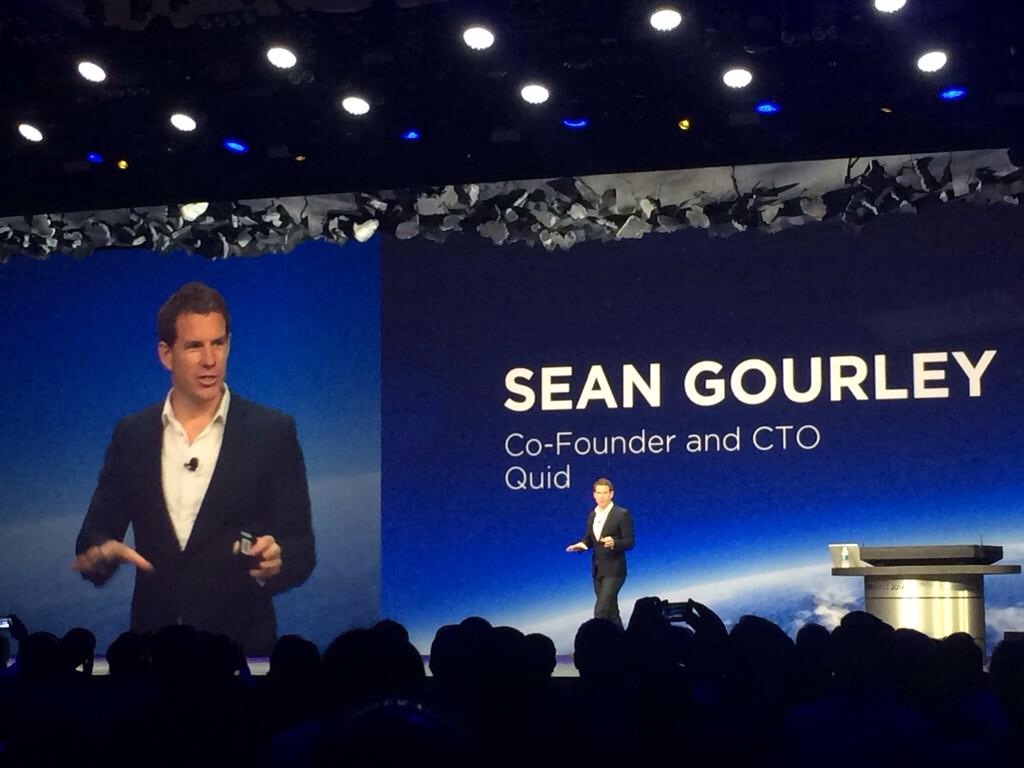
When this interview ran, Sean Gourley was the founder and CEO of Primer AI, a machine intelligence startup he founded in 2015 after co-founding Quid and serving as its CTO. Before Silicon Valley he studied complex systems and the mathematics of war at Oxford. He talked about second-time founding, self-doubt, and hiring early.
For Sean Gourley, founding a startup — the first time around, anyway — can feel like walking around an undiscovered jungle, not knowing what dangers may await.
Gourley, then founder and CEO of Primer AI, a machine intelligence startup that automated analysis of large data sets, came to the startup world by way of scientific research. Before moving to Silicon Valley, he spent years at Oxford University studying complex systems and the mathematics of war, first as a PhD student and later as a research fellow.
“I’m a physicist by training. I did my PhD in computational physics, and applied that work to understand the mathematical patterns of war and insurgency,” Gourley said. “That work took me to a bunch of interesting places, from Northern Iraq to the United Nations, and then coming out of that, I had a strong sense of wanting to build technology and not just do the science. That’s what led me to Silicon Valley.”
Gourley’s first startup was Quid, which he co-founded and helped to lead as CTO. In the case of both Quid and Primer, the team was building deep technology — complex artificial intelligence systems that require lots of talented, specialized engineers to make a reality. Unlike a typical SaaS company, “the minimum viable product doesn’t work; it either works or it doesn’t,” Gourley said.
Founded in 2015, Primer developed machines that can read and write, enabling automation of very large data sets used by governments, financial institutions and large companies to make their most consequential decisions. At the time of this interview, Primer had raised $58 million, and its technology was used by influential organizations to analyze everything from financial markets to pandemics. Tracxn’s 2026 company profile for Primer lists total funding of $237 million over six rounds and Gourley as its former founder and CEO.
“The second time you get around, you’ve been through the ups and downs, you’ve got your battle scars, and you’ve earned the credibility to do things a bit on your own terms,” Gourley said. “For me, I had a good sense of where the science was going, and I had a good understanding of the customer. But I need to prove that I can actually build it.”
Whether you’re building deep technology or not, the internal challenges or running a startup are familiar to any founder.
All startup founders experience moments of self-doubt and second-guessing, or worrying whether funding or customers will keep coming in. That’s especially the case with first-time founders, who are encountering a whole host of obstacles and experiences that they’ve likely never dealt with before.
“There is a feeling of existential angst: What are we doing, and why are we doing it? When you have that kind of worry, it’s a sign that, look, this matters. It’s important, and you should probably spend time with it,” Gourley said. “But you can’t let that worry consume you, make you fearful, or make you doubt yourself.”
It’s easier to put things in perspective the second time around, and founders at any stage should know worries are perfectly typical, no matter what stage your company is at, or whether you’ve launched one company or several. Founders should focus on what’s in front of them, and as much as possible, savor the journey.
“When you go through it a second time, you have confidence that if we execute against what’s in front of us, we will get the next round of capital, we’ll get the next set of customers, we’ll hit the next revenue milestone,” added Gourley. “We’ll get that, but let’s make sure we do our work today.”
Particularly for technology founders, it’s critical to invest in your early team, according to Gourley.
“One of the things we did early on was run a very, very rigorous recruiting process. For a four-person startup, we were recruiting against Google and Facebook at the time, and that was the kind of diligence we were putting into the process,” he said. “Early mistakes in hiring can ruin you; you want to make sure you’ve got high precision in the decisions you’re making as a team of five.”
That meticulous hiring process has a secondary effect: instilling a culture of excellence in your team, and confidence that the group will succeed in building technology that breaks new ground.
“People took the rigor that we put into recruiting and said: This is the kind of company that I would want to work for, because I can trust the care and respect that they’ve put into this,” Gourley said.
Founders Network is a peer mentorship community for tech startup founders. If that fits where you are, request an invitation.
Frequently asked questions
What did Sean Gourley study before founding startups?
Gourley did his PhD in computational physics and applied it to the mathematical patterns of war and insurgency. He was later a research fellow at Oxford University.
What does Primer AI do?
Primer developed machines that can read and write, which automates analysis of very large data sets. Governments, financial institutions, and large companies used it for their most consequential decisions.
How is founding a company the second time different?
Gourley says repeat founders come with credibility and have earned the right to do things on their own terms. They also trust that executing on today's work will bring the next round, the next customers, and the next revenue milestone.
How did Primer approach early hiring?
Primer ran a very rigorous recruiting process, even as a four-person startup recruiting against Google and Facebook. Gourley says early hiring mistakes can ruin a company and that rigor also builds a culture of excellence.