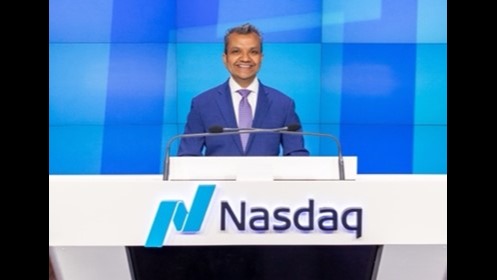
Dr. Shalabh Gupta practiced medicine for a decade before becoming founder and CEO of three biotech companies: BioCycive, Globavir and Unicycive. He left clinical work because a startup could reach far more patients than he could see one at a time as a physician.
Dr. Shalabh Gupta’s journey to becoming a founder started during his medical training at New York University Medical Center. He became a physician for two main reasons. First, he was very interested in medical innovations. And, second, he found that as a doctor, he could help people in the most direct and tangible way.
However, as he advanced in his training, he also realized that as a physician, he could only help a few patients a day, a few hundred patients a month, and perhaps a few thousand patients a year. He quickly learned that to maximize his impact on the medical field, he would have to ditch the white coat.
“I saw that new innovations could help patients in a way that I could not do as a physician by seeing one patient at a time,” Dr. Gupta says. “It was great to have a medical background. Still, I felt that I needed to also understand a component of healthcare that I didn’t really get to learn in my medical career. So I went to graduate school at NYU to earn a graduate degree in healthcare finance and management.”
At the time of the webinar, Dr. Gupta had been the founder and CEO of three companies. His first company, BioCycive, targeted a pathway that had been recognized with the Nobel Prize in medicine. His second company, Globavir, was founded based on technologies licenses from Stanford University. Globavir developed technologies that were then partnered with Bio-Rad and Cepheid, two of the largest diagnostic companies in the world. He founded Unicycive with the intent to focus on drugs that could help patients with kidney diseases.
On Dec. 15, Dr. Gupta hosted a webinar for Founders Network where he shared insights into his transition from the hospital to creating impactful biomedical technology.
To learn more about medical innovation check out his full webinar from December 15 or explore our entire event video library
A Hand in the Medicine
Dr. Gupta practiced medicine for a decade before entering the startup world. But he didn’t immediately hang up his white coat when he transitioned from medicine to biotech.
While Dr. Gupta worked as a stock analyst covering biopharma public company stocks during the weekdays, he picked up a few weekend shifts each month at the NYU Medical Center, where he did his residency and fellowship. He knew the experience would ultimately be valuable to his startup career, and at the end of the day, he enjoyed seeing patients.
This arrangement that kept him from practicing medicine full time also prevented him from experiencing the burnout so common in the medical profession.
When he moved out to California, balancing both careers were no longer possible. But, his experience doing both provided a unique perspective as he dove deeper into the biotechnology field.
How Doctors Think
Drugs, devices, and healthcare technologies created by biotech firms are typically geared toward physicians. But, as Dr. Gupta knew from his experience practicing medicine, physicians aren’t your typical clients or consumers.
When you tell a doctor that new technology will generate twice the revenue, that might not resonate, Dr. Gupta says. “Doctors don’t think that way.”
“The day-to-day focus for physicians is to help patients get better, and they have insights into what are the challenges in the existing solutions,” he explains. “Talking to them and understanding what pain points they see and what their patients see is a key to coming up with new innovative technologies.”
Dr. Gupta’s experience practicing medicine gave him valuable insight into his customers’ minds. Working in biotech startups gave him the opportunity to take that experience to the next level.
The Mission of Biotechnology
Before launching his own startups, Dr. Gupta joined the biotech firm Genentech, where he worked in a strategy role for drugs that were already on the market or being developed.
By the time Dr. Gupta started working at Genentech, the company had been around for over thirty years and had grown to employ thousands of people.
But, “Genentech still had that culture of focus on the mission of the company that was so very refreshing,” he describes.
Under the leadership of Genentech’s visionaries, the company created a culture that gave everyone a sense of purpose and mission.
“All of Genentech was about doing something that matters to patients,” Dr. Gupta explains. “Even those who were not in the research and development part of the organization. Even if somebody worked in the cafeteria at Genentech, they didn’t feel that they were working in a cafeteria serving sandwiches or coffee. They felt they were making the world a better place.”
It was a sense of mission that left an indelible impression in his mind and led him to think about starting a company on his own.
During his webinar, Dr. Gupta covered:
- Finding a true unmet need that can help a venture succeed
- Understanding what investors want to see
- Measuring success for products
- Lessons from the growth of Genentech
- How to create a mission-based company culture
- Building a biotech startup team
To learn more about medical innovation, see if you qualify for membership and check out the webinar from December 15.
Frequently asked questions
Why did Shalabh Gupta leave medicine for biotech?
As a physician he could help only a few patients a day. He concluded that new innovations could help patients in a way he could not by seeing one at a time.
What companies has Shalabh Gupta founded?
At the time of the webinar he had been founder and CEO of three companies: BioCycive, Globavir, and Unicycive. Unicycive was focused on drugs for patients with kidney diseases.
How do you sell biotech products to doctors?
Gupta says physicians do not respond to claims that a technology will generate twice the revenue. He recommends talking to them about the pain points they and their patients see in existing solutions.
What did Gupta learn at Genentech?
He saw a company culture built around a sense of mission, where even people outside research felt they were doing something that matters to patients. It pushed him toward starting his own company.